Feminist Lawyers Experience Sharing Workshop in Istanbul
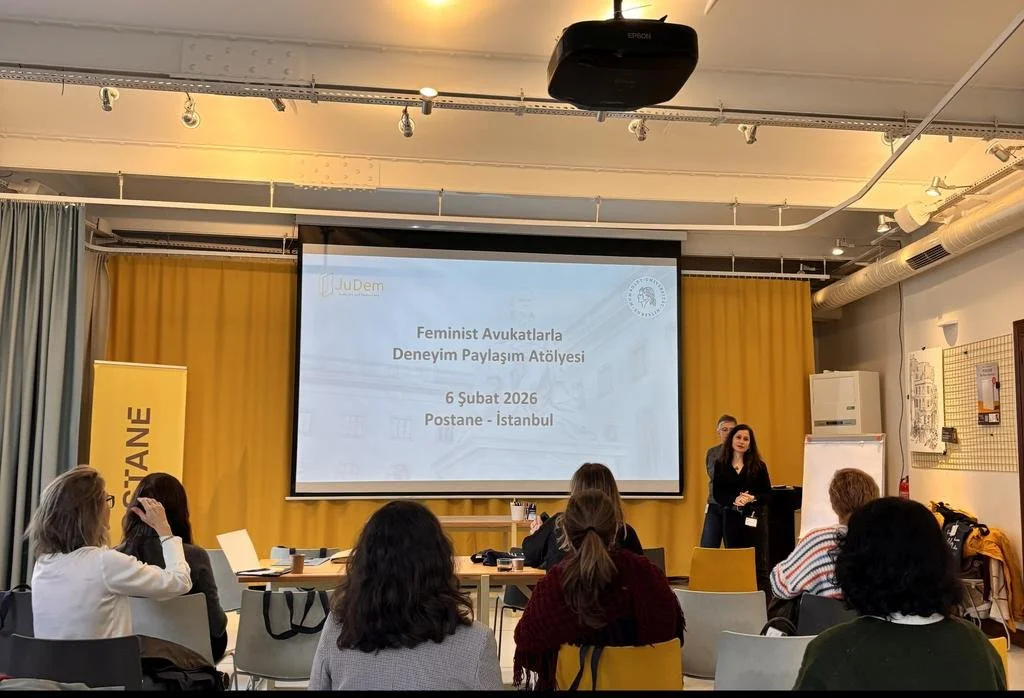
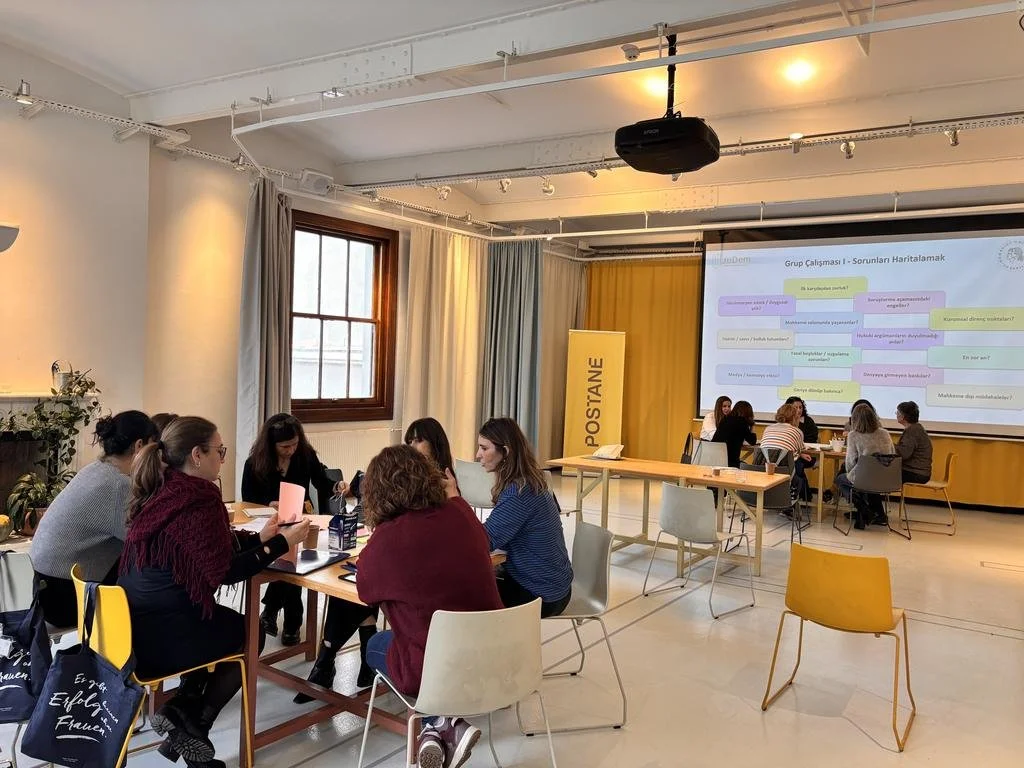
On 6 February 2026, the workshop “Experience-Sharing Workshop with Feminist Lawyers” was held at Postane in Istanbul, bringing together feminist legal practitioners to discuss structural challenges encountered in cases related to gender-based violence. The discussions focused particularly on problems emerging during the investigation and trial phases. Participants highlighted issues such as inadequate evidence collection by law enforcement, the trivialization of violence at the police level, insufficient information provided to complainants about their procedural rights, and language barriers faced by migrant women. These shortcomings were identified as key factors limiting women’s effective access to justice and increasing the risk of acquittals in cases, especially in sexual violence investigations.
During the trial phase, participants emphasized the limitations of the legal aid system, which suffers from insufficient financial resources and delayed payments. Long judicial processes and persistent forms of gender bias within legal proceedings were also identified as major obstacles. Feminist lawyers noted that victims’ emotional responses, such as fear, shame, or withdrawal, are often misinterpreted by courts and used against them. At the same time, broader structural pressures, including the political climate, institutional constraints, and shortcomings in judicial training and expertise, were discussed as factors that influence the functioning of the justice system and its ability to deliver gender-sensitive decisions.
The workshop also served as a space to reflect on possible strategies for strengthening access to justice and feminist legal advocacy. Participants discussed tools such as strategic litigation, systematic documentation of rights violations, closer collaboration between bar associations, municipalities, and civil society organizations, and the expansion of gender-sensitive training within legal education. Strengthening collective reflection and solidarity among feminist lawyers was also emphasized as an important step toward building a more accountable and equality-oriented legal framework.